

It’s more obvious than you think
Healthy people don’t want to be sick.


London, 2014
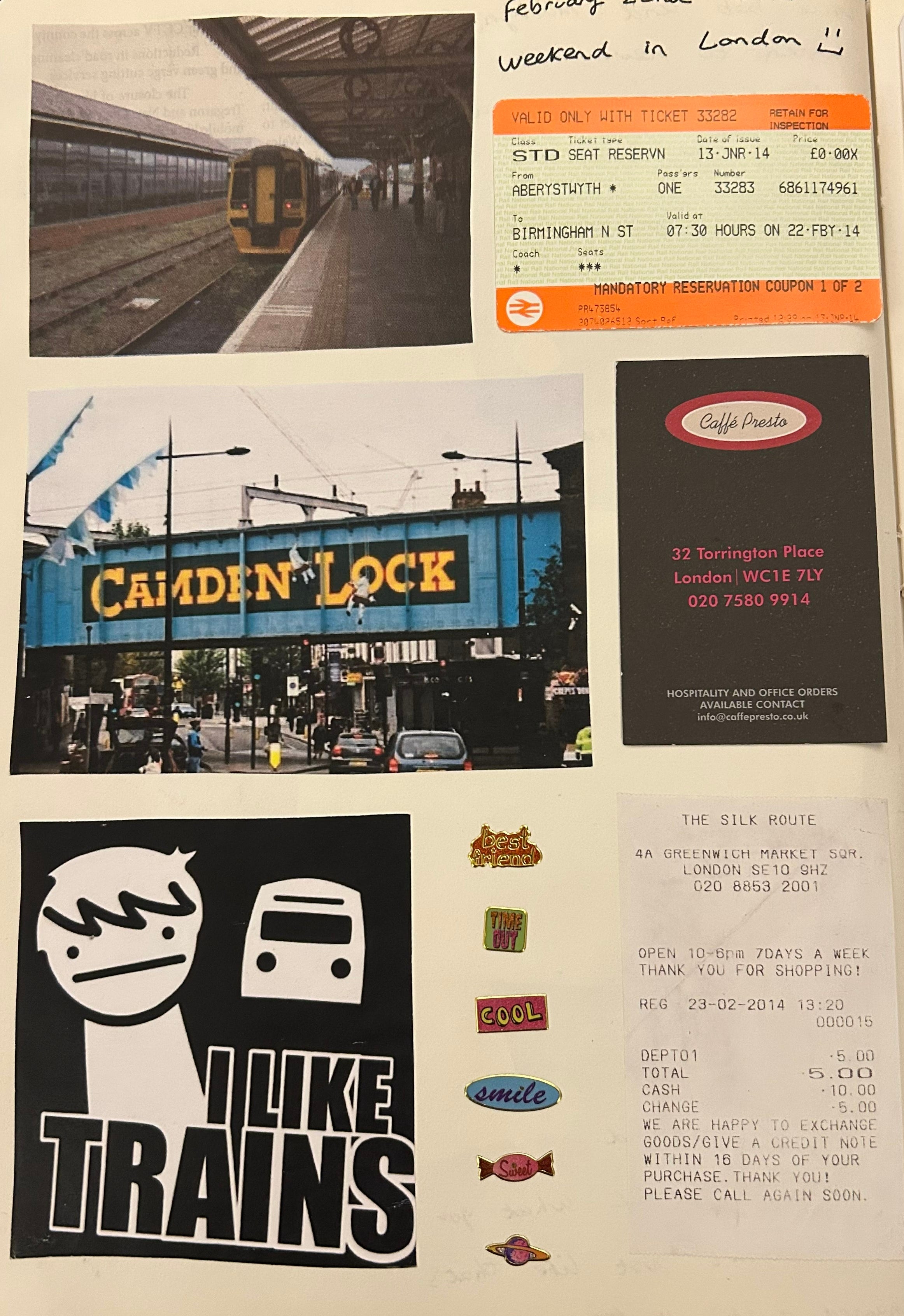
I was twenty-one and I had never been to London. I didn’t particularly want to go to London, but my grandma was adamant that I should see the capital city. To me this just sounded like ‘do what everyone else does’ and I almost didn’t go. I was won over by a) Camden Market and b) my friend J.
J was a couple of years younger than me, fascinatingly well-travelled, and had just started a degree at SOAS. I was nearing the end of my degree, and it was patently clear I had no idea what I wanted to do afterwards, so I figured spending time with other students and pretending I’d never have to enter the Real World was as good a choice as any.
2014 was the year my eating disorder peaked, due in no small part to a fear of the looming future. I think of this time fondly, despite knowing I shouldn’t. Perhaps it’s not the eating disorder I’m fond of, but the people who were there for me. People like J, who knew I was sheltered and lacking a sense of direction. I wouldn’t have gone to London on my own, but if J handled the Underground I’d be okay. I recall being calmer than I had ever known — calm, that is, until I binged on fear foods, but if we choose to ignore that, I was totally zen. I was so emotionally numb that I barely felt anxious, so obsessed with starvation that other concerns, like navigating the capital city, barely registered at all.
This would not last. I was ill before I reached this point, and I’d continue to be ill long after the honeymoon phase wore off. Eventually I’d find making decisions impossible, because the only decision I’d put any thought into, had any energy for, was the decision not to eat. It left no space for anything else. My emotions came back, bigger than ever before, and all my problems would still be there, waiting for me, with a few new ones thrown in for good measure. Anorexia solved nothing. I hope you know that.
We went to Camden and Shoreditch and Brick Lane, all the trendy places you go when you’re in London. I bought a lovely tartan dress, despite the stall vendor insisting it wouldn’t fit. A reverse sales tactic, perhaps? I thought he meant it would be too small.
J was an excellent host, telling me to make myself at home in her student halls, pointing out where I could find the oats and the milk and the microwave so that I could make myself breakfast. Porridge was my ultimate safe food, but J didn’t have kitchen scales and I wasn’t willing to eyeball it. Or maybe she did have scales, I don’t remember. I just knew from experience that weighing my food led to concerned looks. No bother. I’d come prepared with cereal bars. I woke up too early and ate them with coffee, listening to Silverchair on my Phillips mp3 player, which was thoroughly antiquated even back then.
Things felt… not good per se, but manageable. I was in control, doing my thing, thrilled with how far I’d come. To think I used to eat 2,000 calories a day! And have periods! It wasn’t until I got on the train to go home that the struggle caught up with me. It’s a couple of hours from London to Birmingham; from Birmingham, it’s four hours through Shropshire and mid-Wales back to Aberystwyth. I took a window seat, reading Fangirl by Rainbow Rowell and glaring at a Frijj milkshake. The milkshake was all I was allowing myself for the journey, and its very existence was tormenting me. Why couldn’t I be one of those people who forgets to eat and drink?
The carriage was filling up, and a man sat next to me. He didn’t know how badly I did and did not want to drink that milkshake. He didn’t know my attention span had gone to shit and I was incapable of reading the book in front of me. (This did wonders for my English degree, of course.) He didn’t know how far I was retreating into myself, laser focused on hunger to numb my feelings, listening to Neon Ballroom on repeat because no one understood me like an Australian rock star who’d had anorexia fifteen years ago. As far as I was concerned, I wasn’t giving off any sort of vibe. All of this was happening internally.
The man got up and sat somewhere else. I don’t mean that he saw a free seat and did the polite thing of letting me sit by myself. He sat next to another stranger. Maybe I was giving off a vibe. Perhaps my entire aura said to leave me alone.
There was no big epiphany. No moment of thinking, jeez, maybe I should stop what I’m doing. It did occur to me, however, that the things I thought I was hiding were apparently more obvious than I’d first thought. You can’t know who has an eating disorder by the way they look. I’ve said it before and I’ll say it again: EDs sink their talons into us long before any physical side effects — weight loss, dry skin, shedding hair — become visible. The effect it has on one’s personality, however, is striking. Behavioural changes may be one of the first things parents, friends, loved ones or even train strangers notice. Without being able to say why someone is acting differently, they just know something is off.
We hide our disordered behaviours, half hoping we’ll get away with them, half hoping someone will notice. Here’s the thing: they probably do. You don’t think you’re thin, but your whole demeanour has changed. You think you eat too much to have an ED, but you’re weighing your food or flat out refusing to eat something you don’t consider safe. Let’s circle back to that one: you think you eat too much to have an ED, but bulimia and binge eating are EDs too. You may not have a sign around your neck that says ‘I have an eating disorder!’ but you’re glaring at a milkshake and the man who sat next to you has had a change of heart.
It’s more obvious than you think. And if you want to be ‘sick enough’ before you get help, I’ll let you in on a secret: you already are. Healthy people don’t want to be sick.
If you need help
Always seek medical advice in an emergency. In the UK, you can call NHS 111 option 2 for mental health support. Find a list of helplines around the world here.


